Somnath Maji's
Research Group
Bio-Inspired Catalysis Lab
Bio-Inspired Catalysis Lab
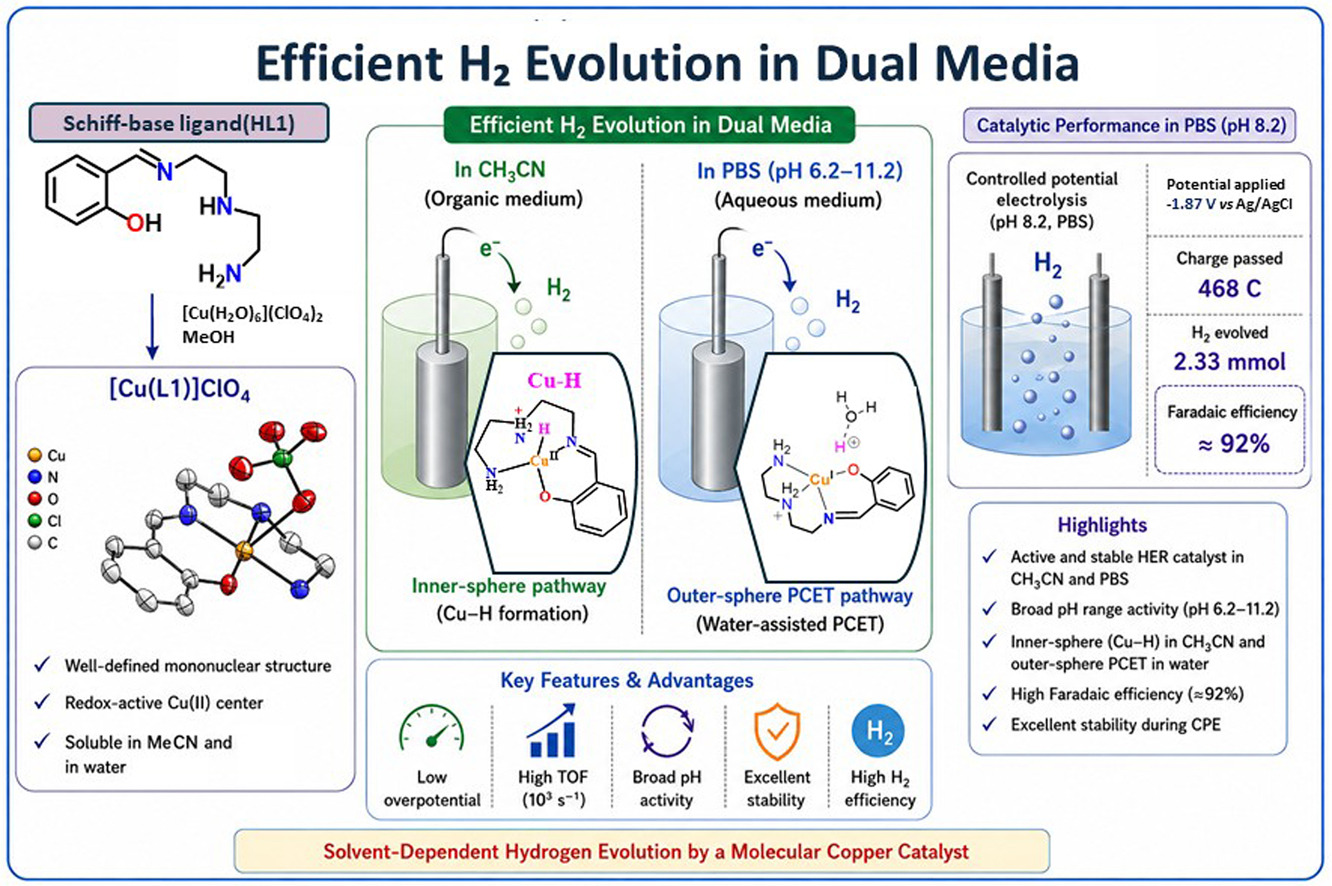
pH-dependent hydrogen evolution by a redox-flexible molecular copper electrocatalyst. Mitra, J., Rakshit,S., Mondal, D., Panda, B., Pal, J., Dhak, D., Maji, S., Maji, R. C. Inorg. Chem. Commun. 2026, 194, 117550.
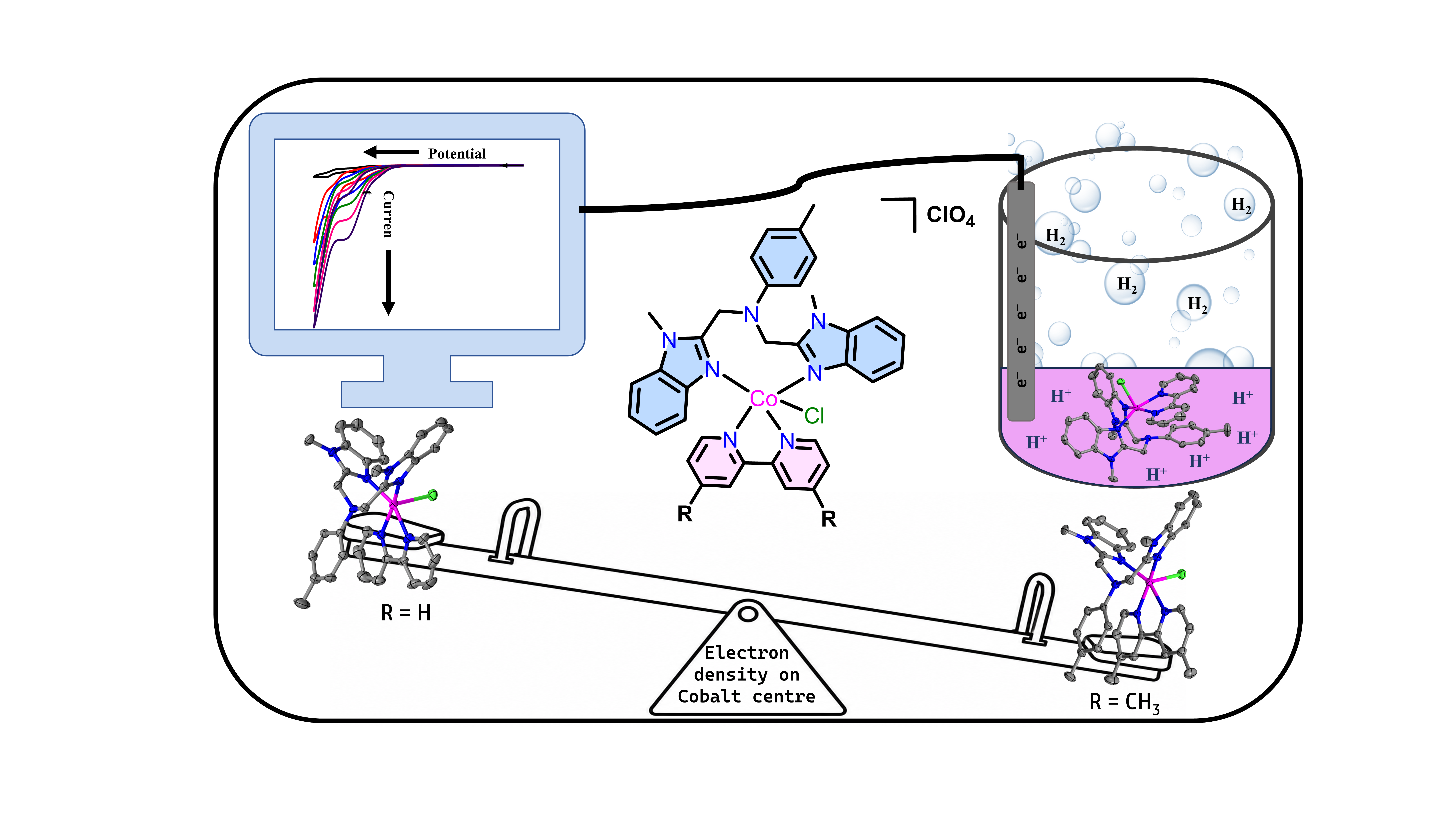
Effects of Ligand Electronic Environment on Electrocatalytic Proton Reduction by Cobalt Complexes. L, K.; Mathur, S.; Roy, I.; Maji, S. Chem. Asian J., 2026, 21, e70969.
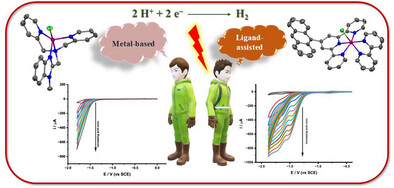
Ligand-Directed Pathway Divergence in Electrocatalytic Hydrogen Evolution by Rationally Designed Cobalt(II) Complexes. Mathur, S.; Mishra, G.; Roy, I.; Singh, T.; Ghosh, S.; Maji, S. ChemCatChem, 2026, 18, e70917.
Rational design of Ru(II) polypyridyl luminescent probes for selective cyanide sensing in aqueous media: Experimental and theoretical investigations. Verma, A.; Kumawat, M. K.; Maji, S. Inorg. Chem. Commun., 2026, 191, 117152.
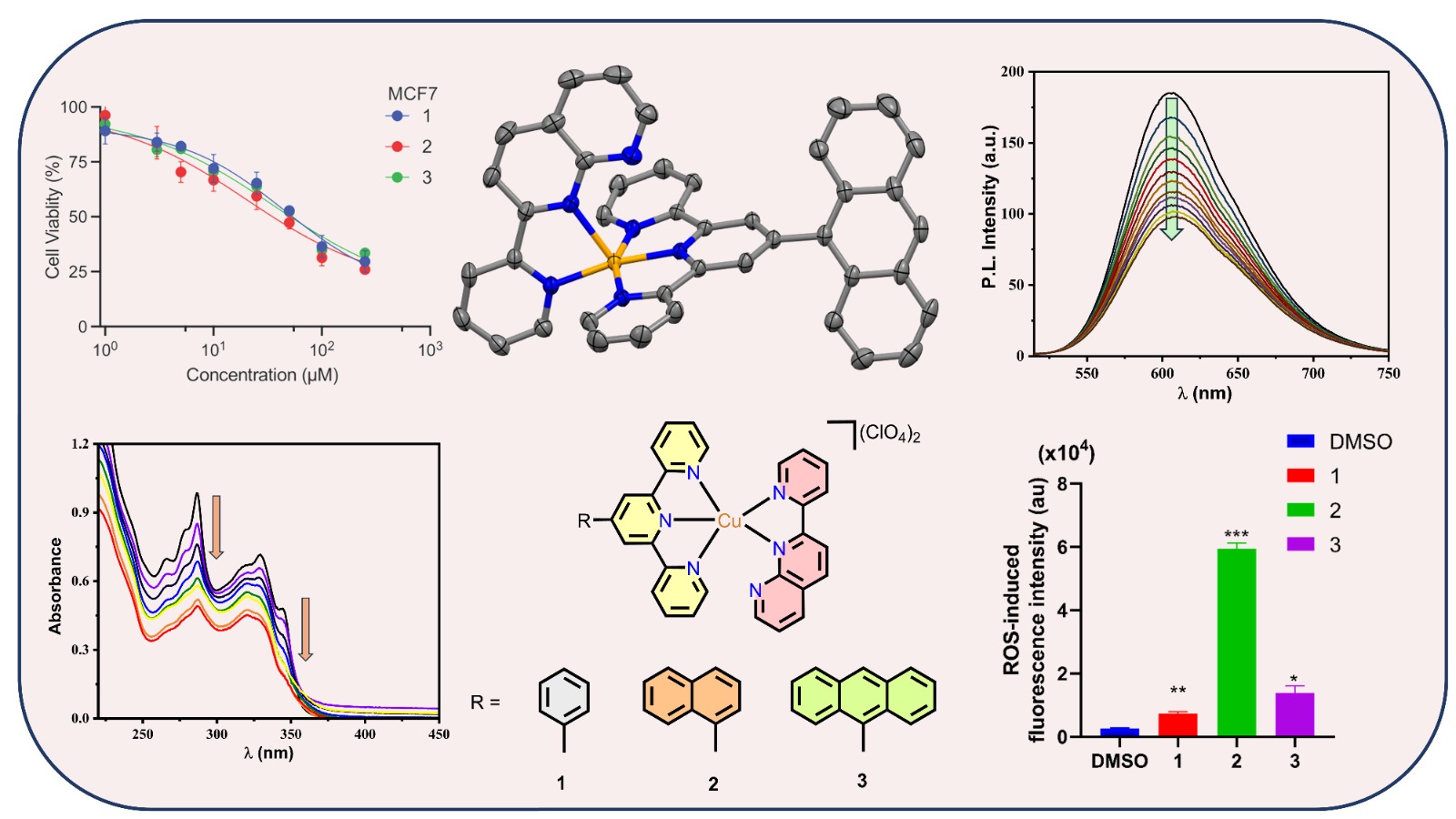
Electronic Effects of 4/-Aryl Substitution in Terpyridine Copper(II) Complexes: Structural Insights, DNA-Binding Affinity, and Cytotoxic Evaluation. L, K.; Mathur, S.; Shahnaz, N.; Patra, S.; Roy, A.; Maji, S. Dalton Trans., 2026, XX, XX-xx.
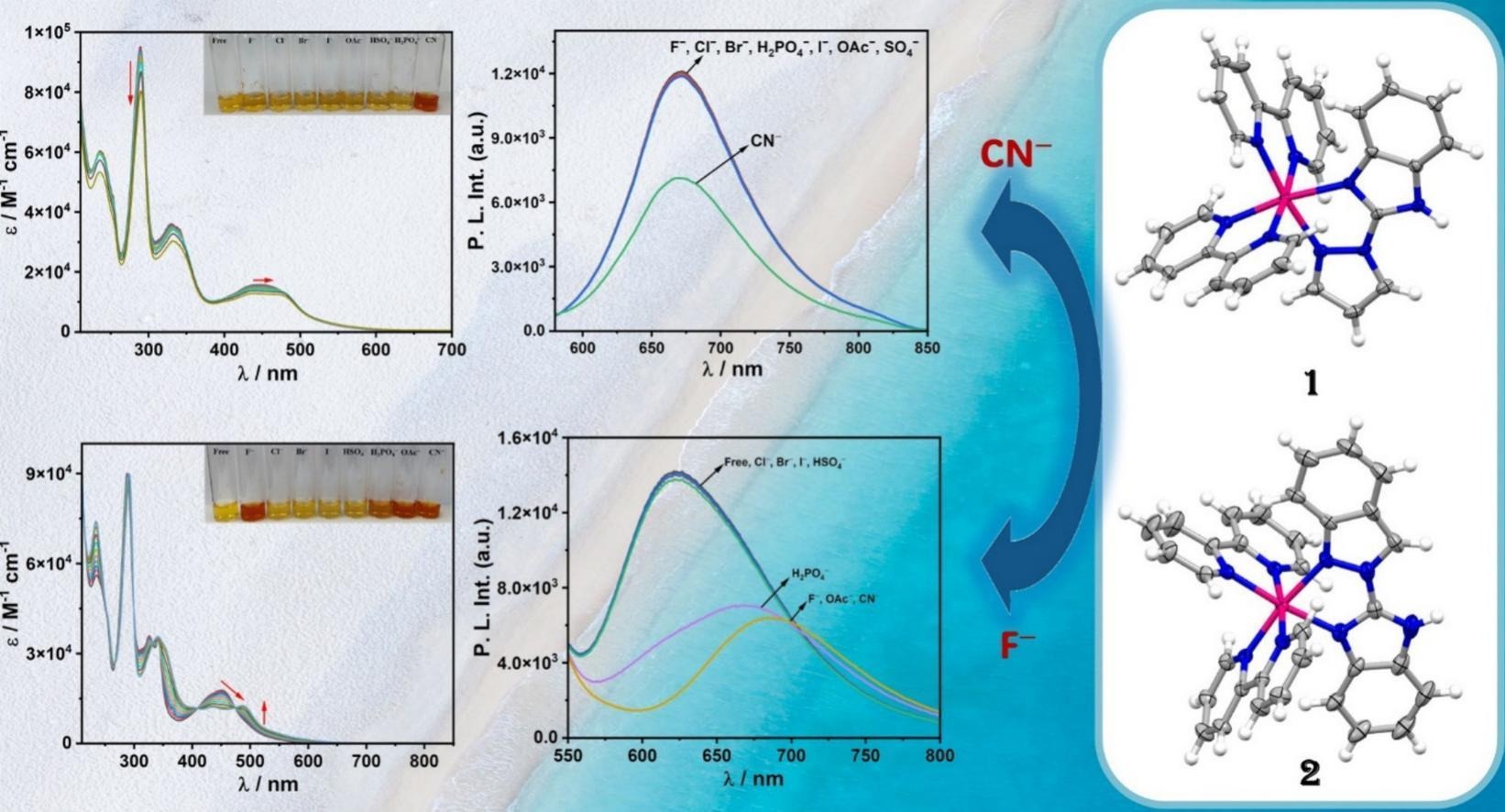
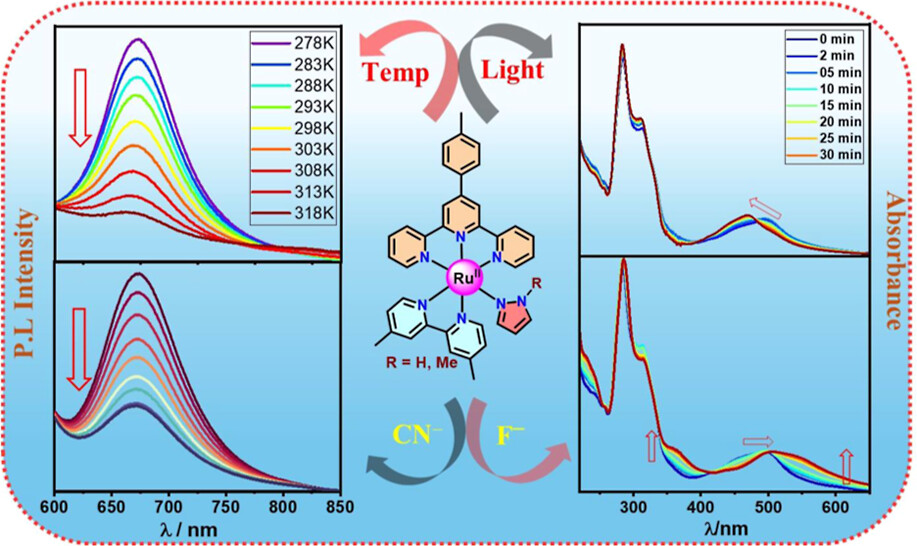
Multi-Stimuli-Responsive Luminescent Ruthenium(II) Complexes as a Selective Sensor for Cyanide Detection in Aqueous Media: Spectroscopic, Electrochemical, and DFT/TD-DFT Insights. Verma, A.; Deb, S.; Kumawat, M. K.; Maji, S. Inorg. Chem. 2026, 65, 14696–14712.
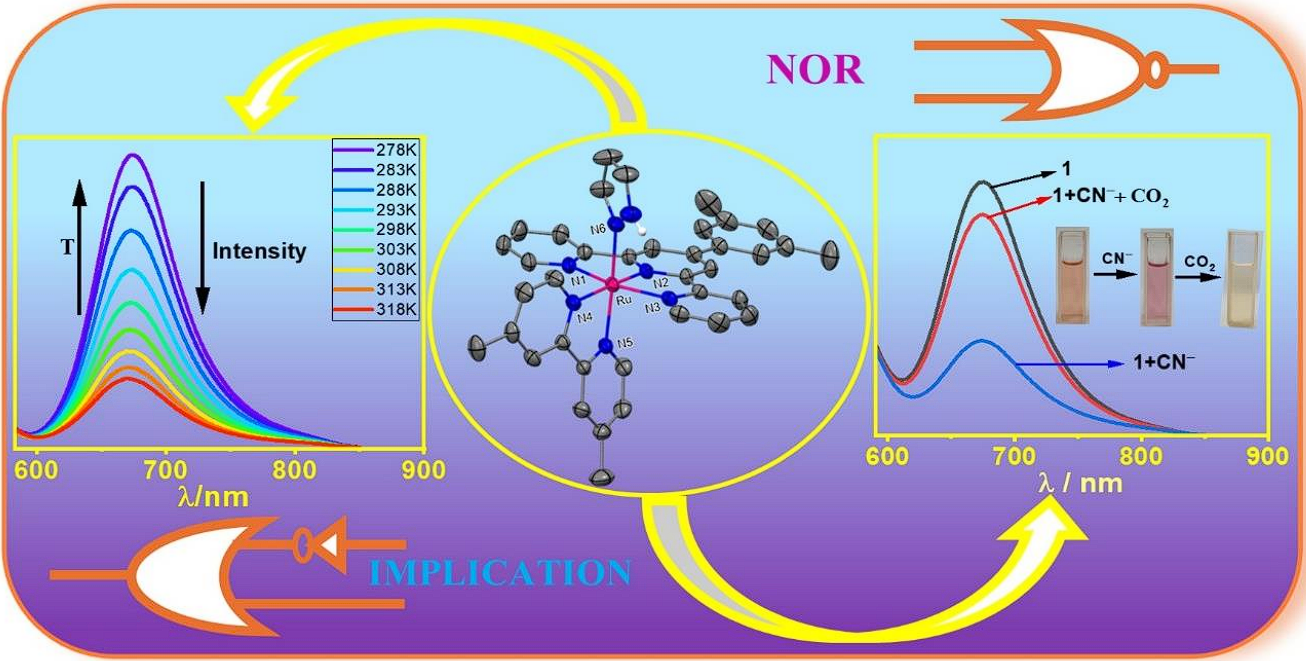
Polypyridine-Based Ru(II) Molecular Switch for Cyanide Detection and CO2-Induced Reversibility in Aqueous Medium: Experimental and DFT Insights. Verma, A.; Deb, S.; Kumawat, M. K.; Maji, S. Chem. Eur. J., 2026, e71262.
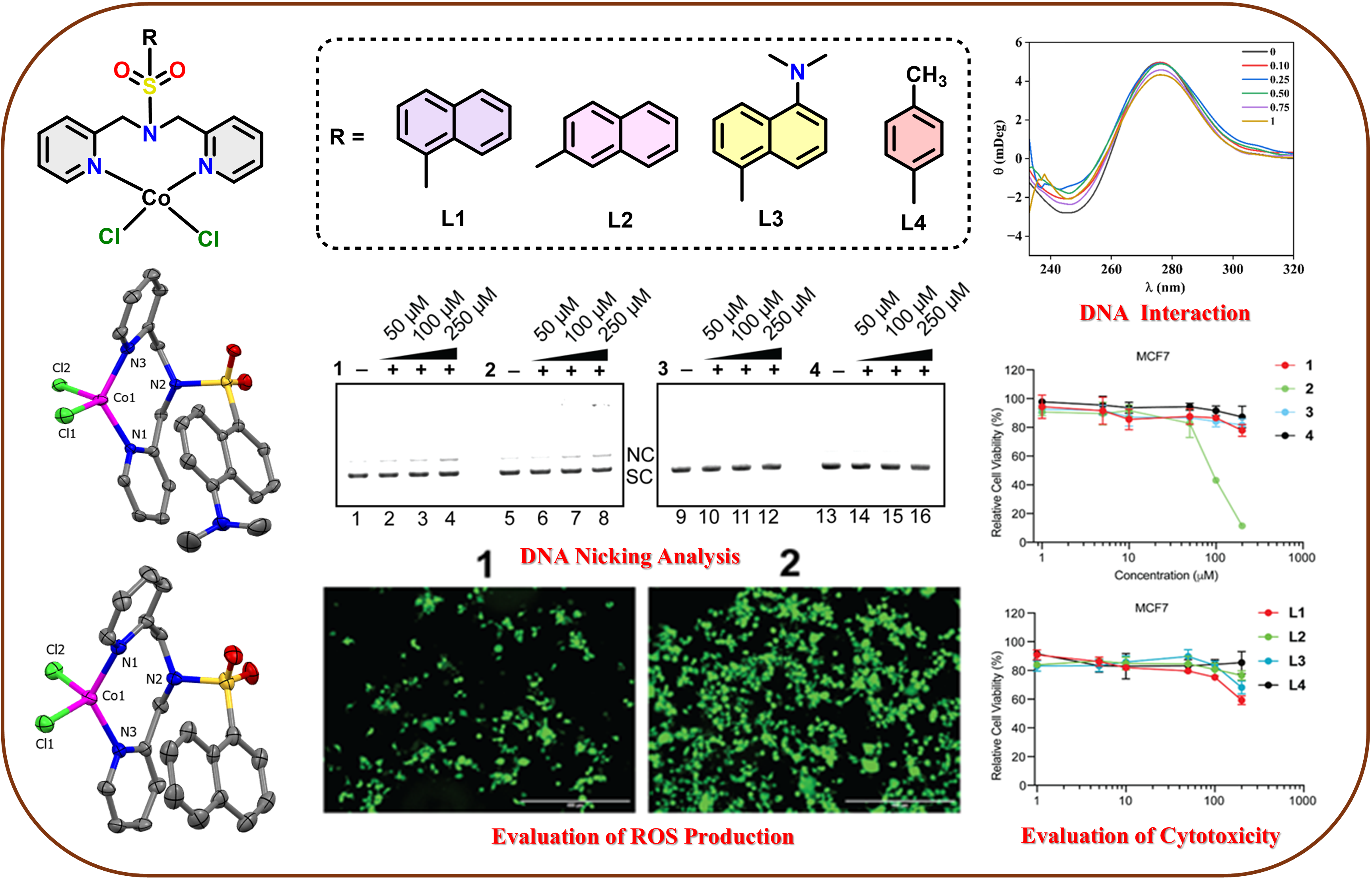
Sulfonamide DPA-Based Mononuclear Cobalt(II) Complexes: Evaluation of ROS-Driven Cytotoxicity. Kumawat, M.K.; Roy, I.; Shahnaz, N.; Rathnam, S.S.V.; Anindya, R.; Maji, S. Chem. Asian J., 2026, 21, e70756.
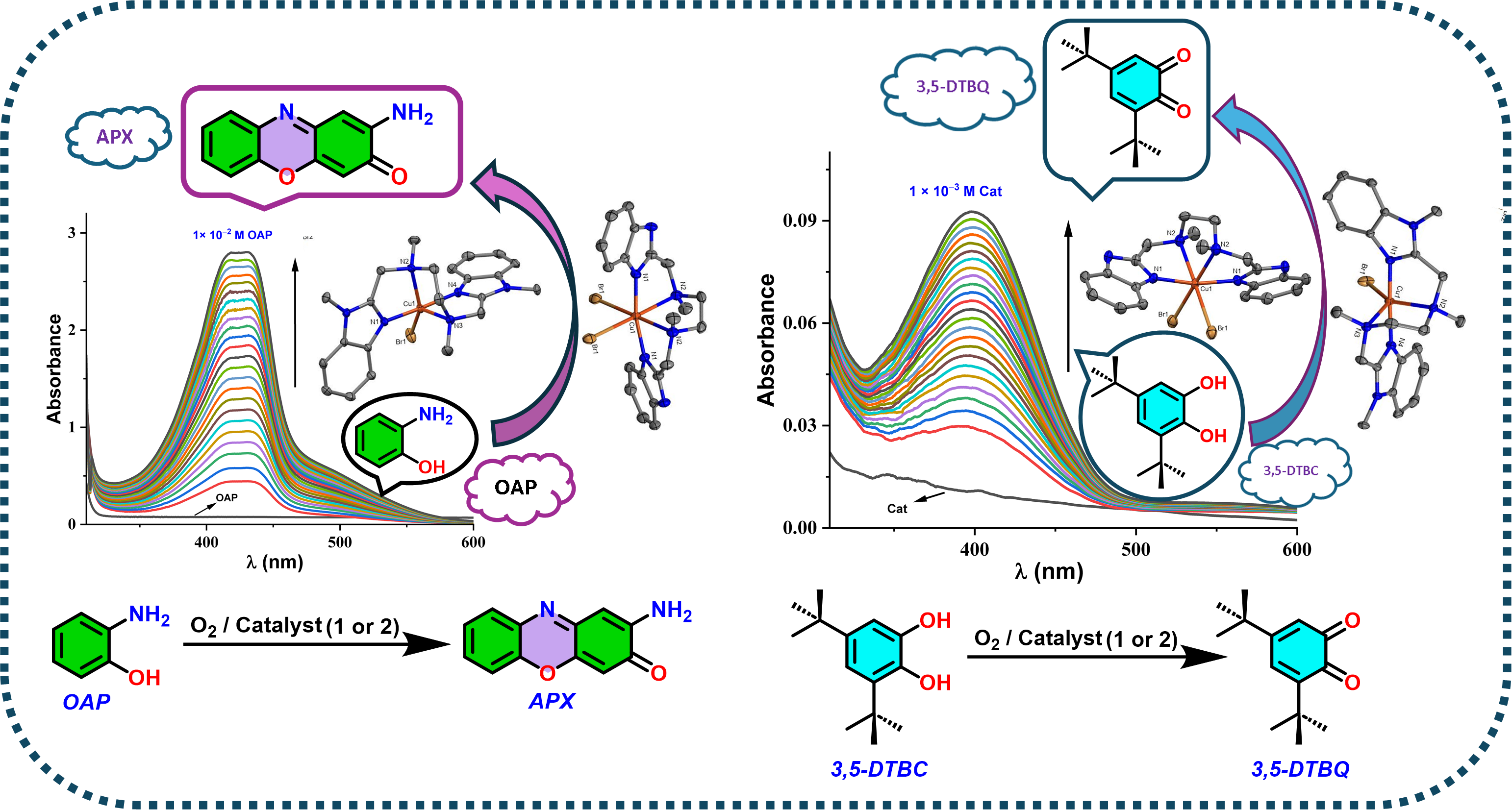
Effect of geometric alteration on mononuclear Cu(II) dibromo complexes towards Catecholase and Phenoxazinone Synthase biomimicking activities. Roy, I.; Paswan, B.; Barat, B.; Maji, S. Inorg. Chem. Commun., 2026, 186, 116236.
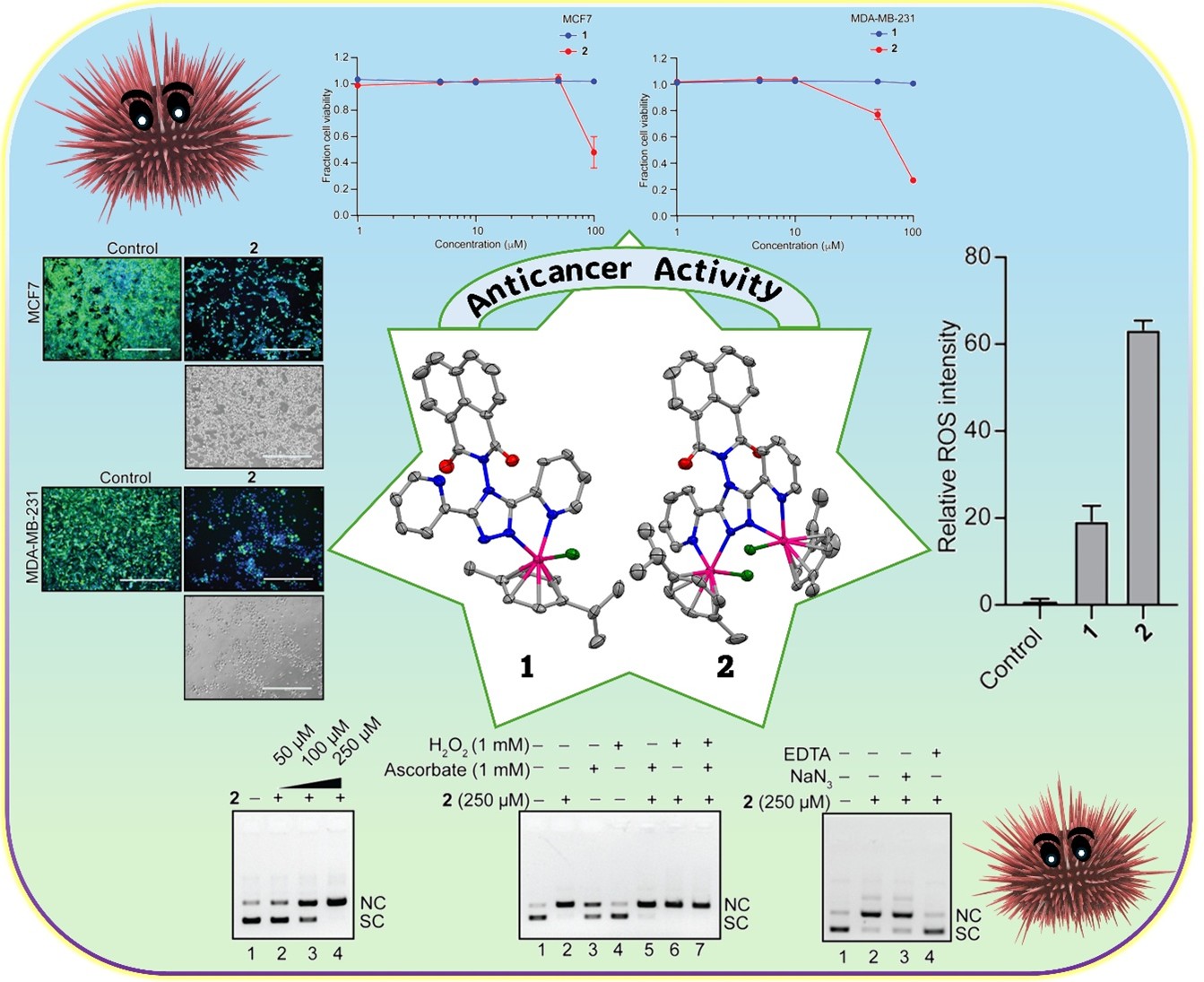
Cytotoxic evaluation of dinuclear ruthenium p-cymene complex with the mononuclear counterpart: A structural perspective. Verma, A.; Muley, A.; Shahnaz, N.; Rathnam, S.S.V.; Roy, A.; Maji, S. J. Inorg. Biochem., 2026, 277, 113217.
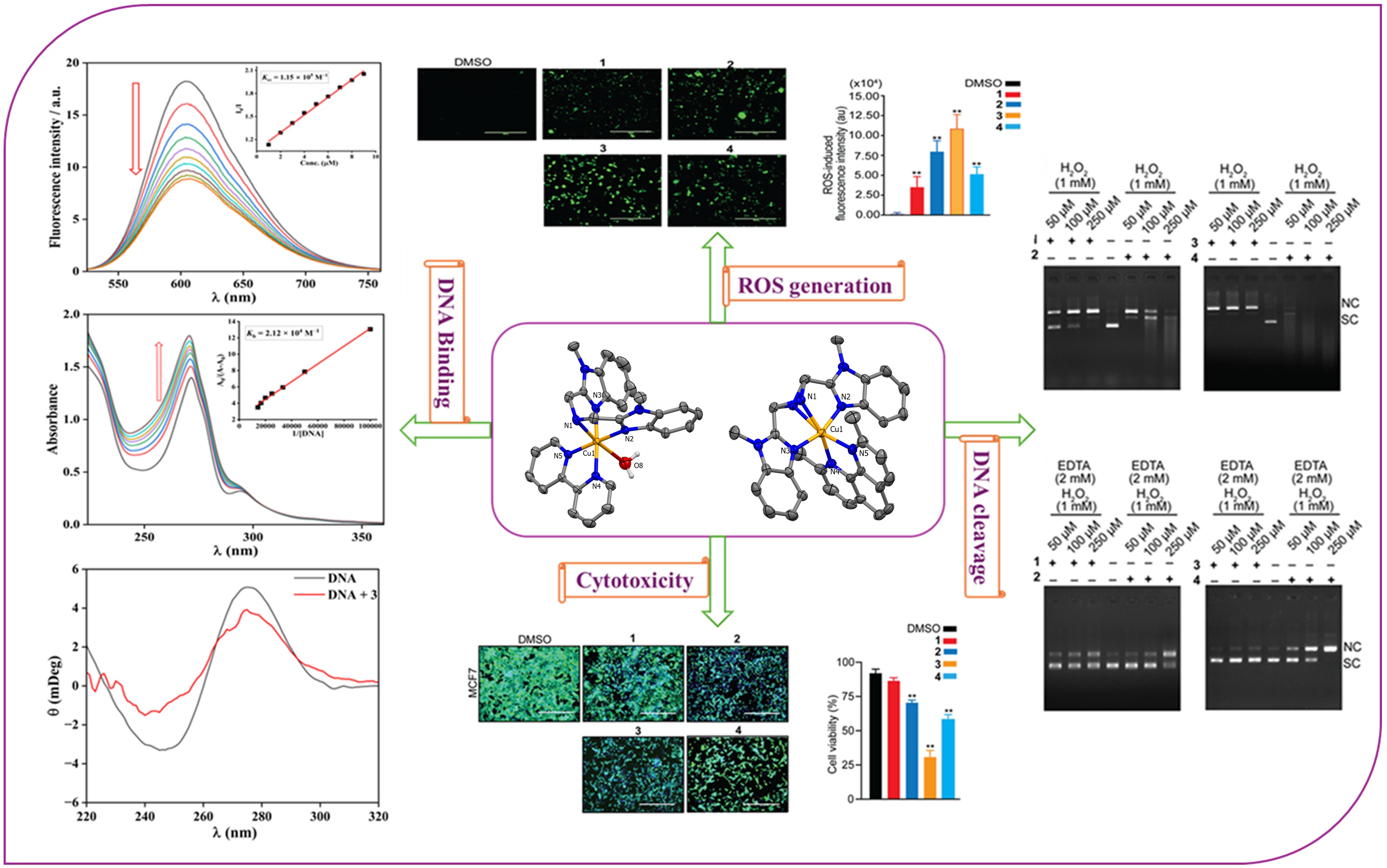
Comprehensive Design, Synthesis of Methyl Substituted Benzimidazole-based Mononuclear Copper(II) Complexes and Evaluation of DNA Cleavage and ROS-induced Apoptosis. Kumawat, M. K.; Mathur, S.; Rathnam, S.S.V.; Jangra, J.; Roy, A.; Maji, S. Dalton Trans., 2026, 55, 1680-1696.
Exploration of dinuclear systems towards catechol oxidase activity with a novel unsymmetric triazole based bis-bidentate ligand. Muley, A.; Verma, A.; Kumbhakar, S.; Mondal, T.; Maji, S. J. Mol. Struct., 2025, 1351, 144235.
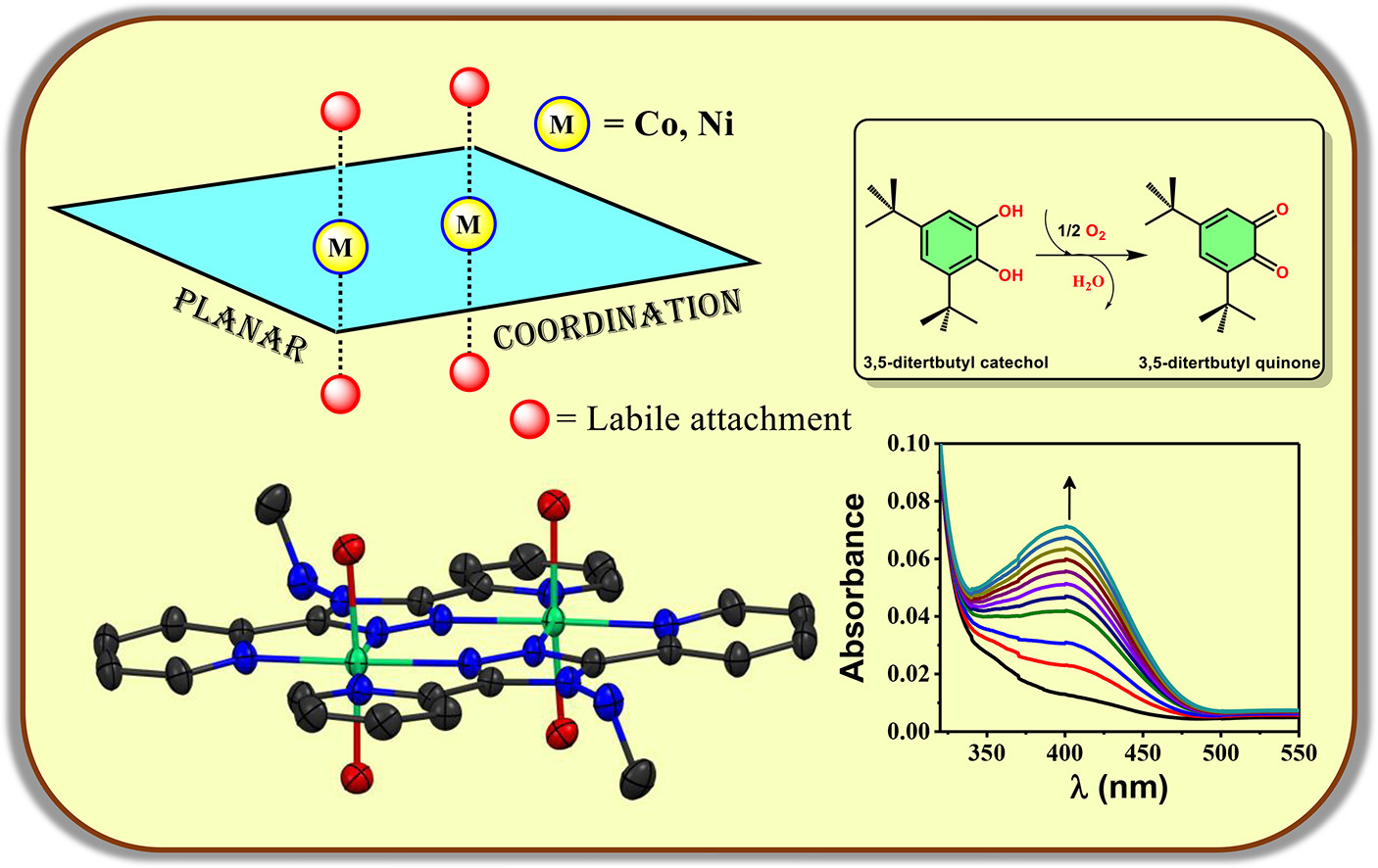
Structurally modified dipyrazinylpyridine-based homoleptic Cu(ii) complexes: comparative cytotoxic evaluation in breast cancer cell lines. Roy, I.; L, K.; Deb, S.; Rathnam, S.S.V.; Jangra, J.; Patra, S.; Anindya, R.; Maji, S. Dalton Trans., 2025, xxxx.
Design and reactivity of Tripodal Tetradentate mononuclear cobalt(II) complexes as biomimetic models for Phenoxazinone synthase and Catecholase activity. Kumbhakar, S.; Muley, A.; Verma, A.; Mahata, B.;Jain, A.; Maji, S. Inorg. Chem. Commun., 2025, 182, 115542.
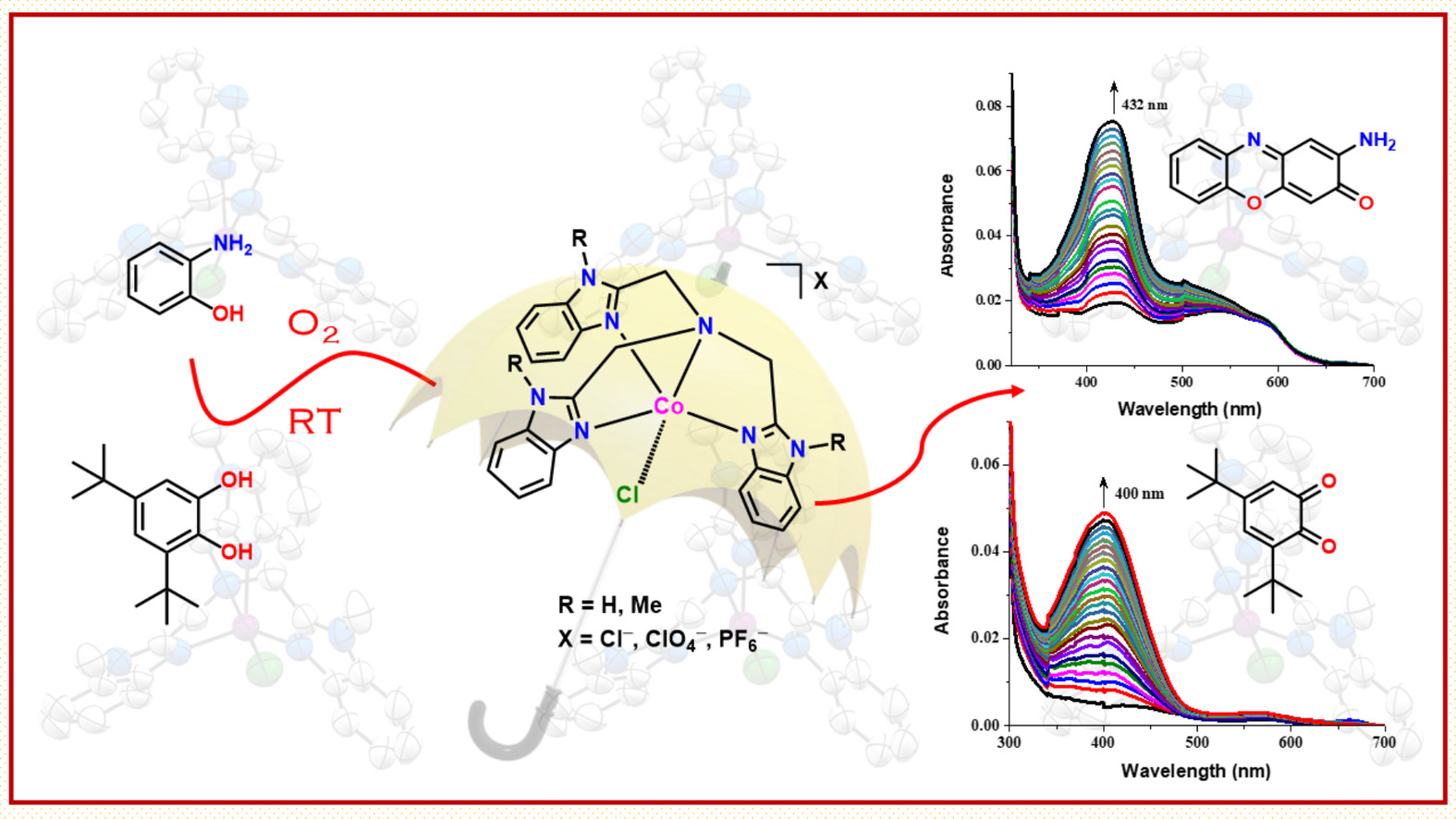
Naphthalene Derived Terpyridine Attached Copper (II) Complexes: Effect of Planarity and Steric Hinderance on DNA Interaction. Mathur, S.; Kumawat, M. K.; Shahnaz, N.; Patra, S.; Anindya, R.; Maji, S. Chem. Asian J., 2025,e00855.
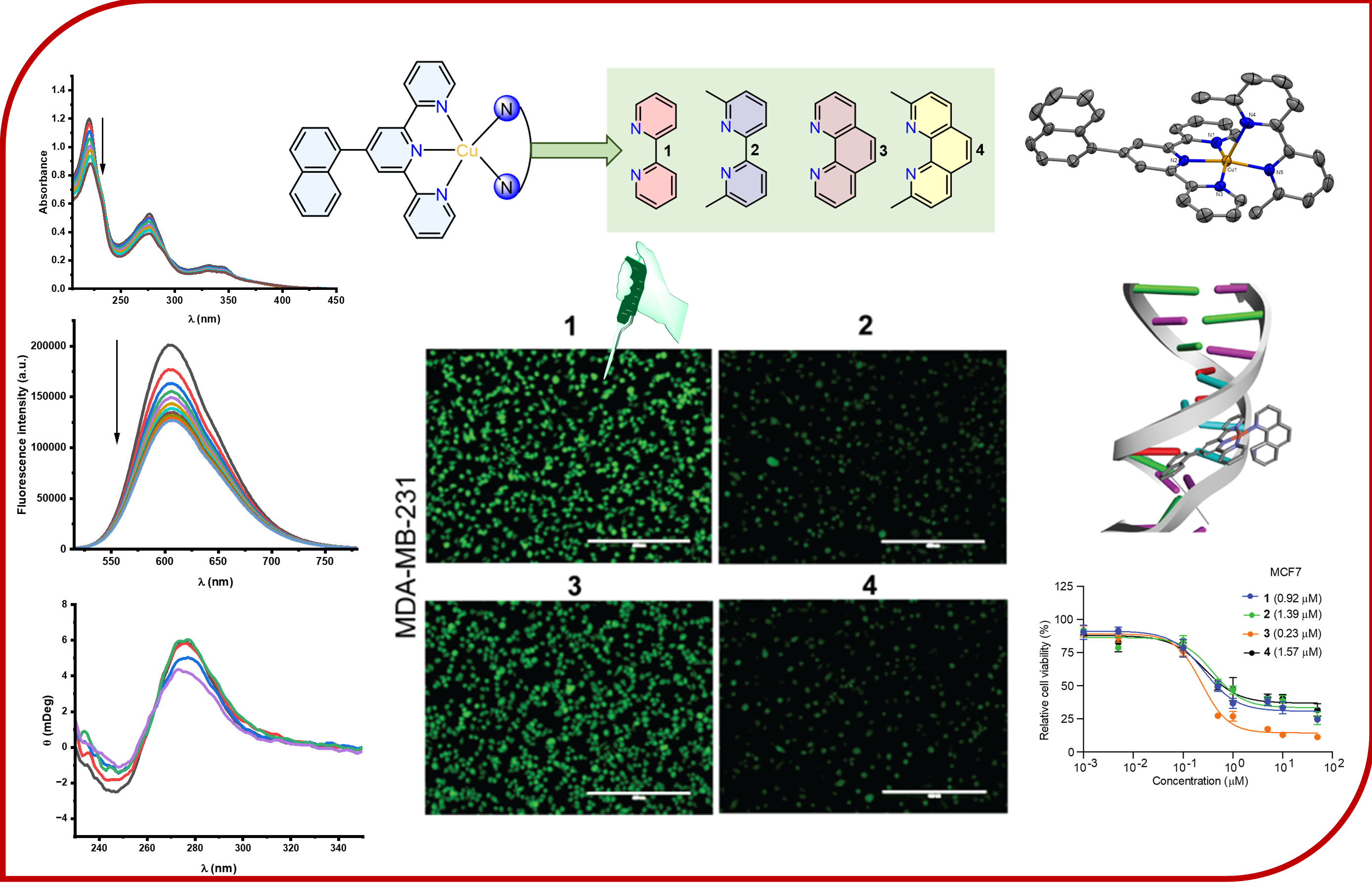
Design and Synthesis of Nitrogen Rich Triazole-Based Mononuclear Ru(II) Arene Complexes Towards Anticancer Activities. Verma, A.; Muley, A.; Rathnam, V. S. S.; Jangra, J.; Mathur, S.; Anindya, R.; Maji, S. Eur. J. Inorg. Chem., 2025, 28, e202500300.
 Arene.png)
Benzimidazole-based mononuclear polypyridyl Cu(ii) complexes: DNA binding, cleavage, and in vitro antiproliferative studies. I. Roy, S. Mathur, S. Deb, S. S. V. Rathnam, N. Tuti, U. P. Shaji, K. L, A. Roy and S. Maji, Dalton Trans., 2025,54, 6386-6401.
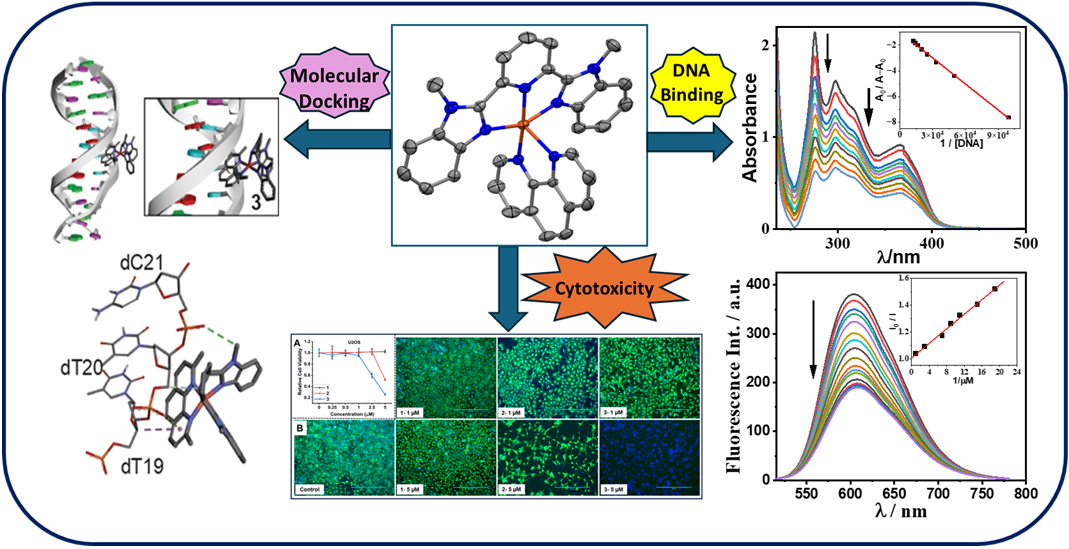
Mononuclear copper(ii) complexes with polypyridyl ligands: synthesis, characterization, DNA interactions/cleavages and in vitro cytotoxicity towards human cancer cells. A. Muley, S. Kumbhakar, R. Raut, S. Mathur, I. Roy, T. Saini, A. Misra and S. Maji, Dalton Trans., 2024, 53, 11697–11712.
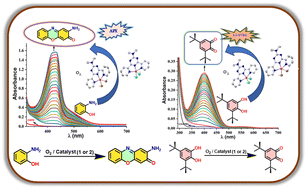
Triazine-based mononuclear copper(ii) cis-dichloro and dibromo complexes as functional biomimetic model systems for phenoxazinone synthase and catecholase activities. I. Roy, A. Muley, S. Mathur, A. Verma, M. K. Kumawat, S. Maji, New J. Chem., 2024, 48, 11647–11661.
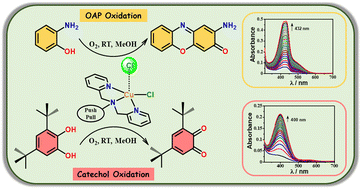
Tailored design, synthesis, and catalytic aspects of mononuclear cis-dichloro copper(ii) complexes with simple DPA-derived tridentate ligands and their biomimicking activities. A. Muley, K. S. Karumban, S. Kumbhakar, S. Mathur, I. Roy, A. Verma, M. K. Kumawat, S. Maji, New J. Chem., 2024, 48, 7739–7753.
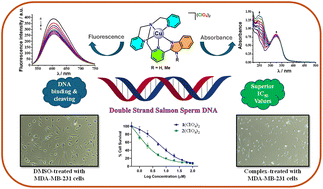
Chromophore appended DPA-based copper(ii) complexes with a diimine motif towards DNA binding and fragmentation studies. S. Mathur, K. S. Karumban, A. Muley, N. Tuti, U. P. Shaji, I. Roy, A. Verma, M. K. Kumawat, A. Roy, S. Maji, Dalton Trans., 2024, 53, 1163-1177.
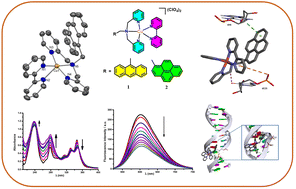
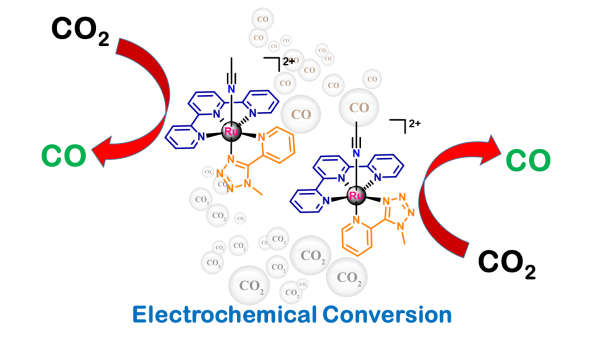
Tetrazole-Substituted Isomeric Ruthenium Polypyridyl Complexes for Low Overpotential Electrocatalytic CO2 Reduction B. Giri, A. Mahata, T. Kella, D. Shee, F. D. Angelis, S. Maji J. Catal., 2022, 405, 15-23.
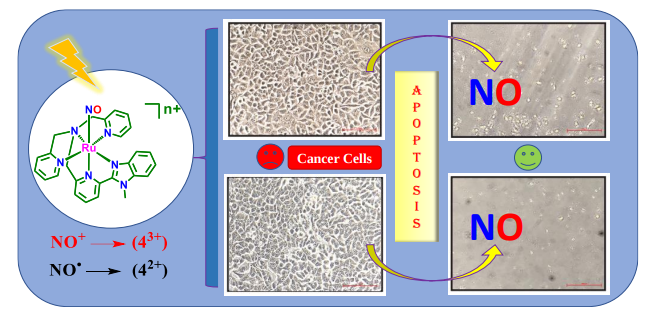
Photolability of NO in ruthenium nitrosyls with pentadentate ligand induces exceptional cytotoxicity towards VCaP, 22Rv1 and A549 cancer cells under therapeutic condition S. Kumbhakar, P. Gupta, B. Giri, A. Muley, K. S. Karumban, A. Misra, S. Maji J. Mol. Struct., 2022, 1265, 133419.
Mononuclear cobalt(II) complexes with Polypyridyl Ligands: Synthesis, Characterization, DNA interactions and in vitro cytotoxicity towards human cancer cells K. S. Karumban, R. Raut, P. Gupta, A. Muley, B. Giri, S. Kumbhakar, A. Misra, S. Maji J. Inorg. Biochem., 2022, 233, 111866
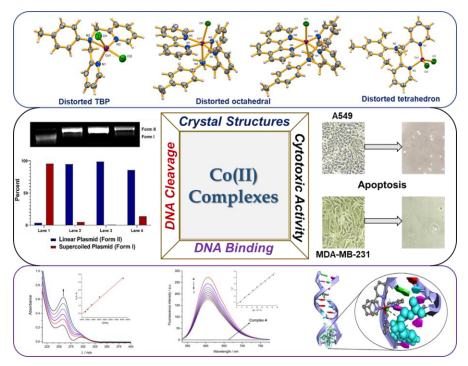
Mononuclear Co(II) polypyridyl complexes: synthesis, molecular structure, DNA binding/cleavage, radical scavenging, docking studies and anticancer activities K. S. Karumban, A. Muley, R. Raut, P. Gupta, B. Giri, S. Kumbhakar, A. Misra, S. Maji Dalton Trans., 2022, 51, 000.
Synthesis, Characterization, Structural, Redox and Electrocatalytic Proton Reduction Properties of Cobalt Polypyridyl Complexes K. S. Karumban, A. Muley, B. Giri, S. Kumbhakar, T. Kella, D. Shee, S. Maji Inorg. Chim. Acta, 2022, 529, 120637.
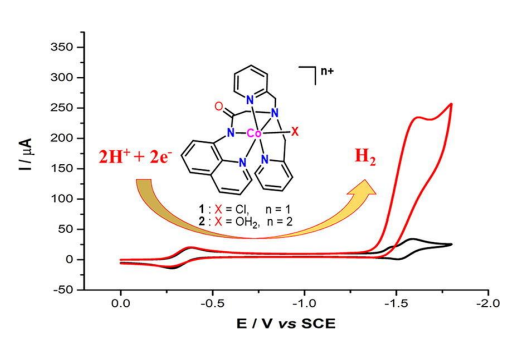
Synthesis, Characterization, Structural and Photophysical properties of Heteroleptic Ruthenium Complexes containing 2-(1H-benzo[d]imidazol-2-yl)quinoline ligand towards Electrocatalytic CO2 reduction S. Kumbhakar, B. Giri, A. Muley, K. S. Karumban, C. Biswas, S. S. K. Raavi, S. Maji J. Chem. Sci., 2022, 134, 1-14
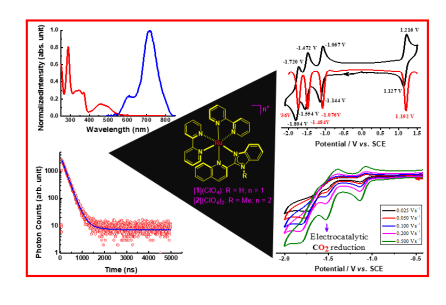
High Phenoxazinone Synthase Activity of Two Mononuclear cis-Dichloro Cobalt(II) Complexes with Rigid Pyridyl Scaffold A. Muley, K. S. Karumban, S. Kumbhakar, B. Giri, S. Maji New J. Chem., 2022, 46, 521-532.
.png)
Design, Synthesis, Structural, Spectral, and Redox Properties and Phenoxazinone Synthase Activity of Tripodal Pentacoordinate Mn(II) Complexes with Impressive Turnover Numbers S. Kumbhakar, B. Giri, A. Muley, K. S. Karumban, S. Maji Dalton Trans., 2021, 50, 16601-16612.
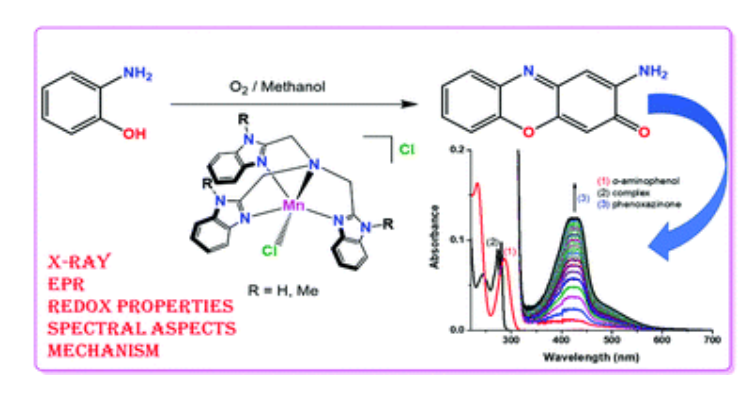
Synthesis, Structure, Spectral, Redox Properties and Anti-Cancer Activity of Ruthenium(II) Arene Complexes with Substituted Triazole Ligands A. Muley, K. S. Karumban, P. Gupta, S. Kumbhakar, B. Giri, R. Raut, A. Misra, S. Maji J. Organomet. Chem., 2021, 954 - 955, 122074
 Arene.png)
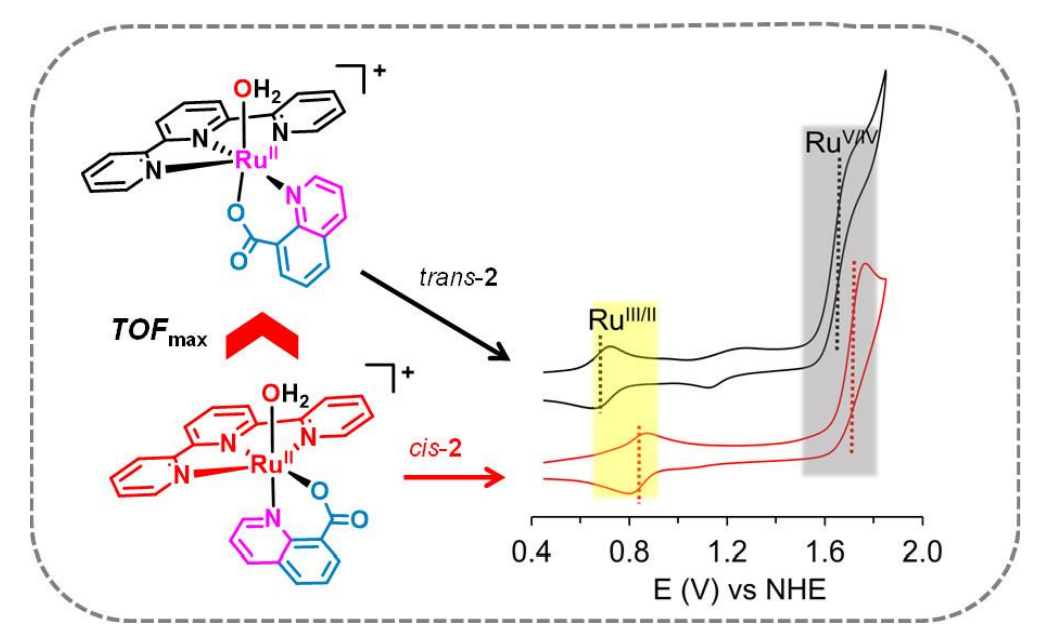
Synthesis, Characterization, and Water Oxidation Activity of Isomeric Ru Complexes M. A. Hoque, A. D. Chowdhury, S. Maji, J. Benet-Buchholz, M. Z. Ertem, C. GimbertSuriñach, G. K. Lahiri, A. Llobet Inorg. Chem., 2021, 60, 5791 – 5803.
Ruthenium Nitrosyl Complexes with the Molecular Framework [RuII(dmdptz)(bpy)(NO)]n+ (dmdptz: N,N-Dimethyl-4,6-Di(Pyridin-2-yl)-1,3,5-Triazin-2-Amine and bpy: 2,2′-Bipyridine). Electronic Structure, Reactivity Aspects, Photorelease, and Scavenging of NO B. Giri, S. Kumbhakar, K. S. K, A. Muley, S. Maji New J. Chem., 2020, 44, 18732 – 18744.
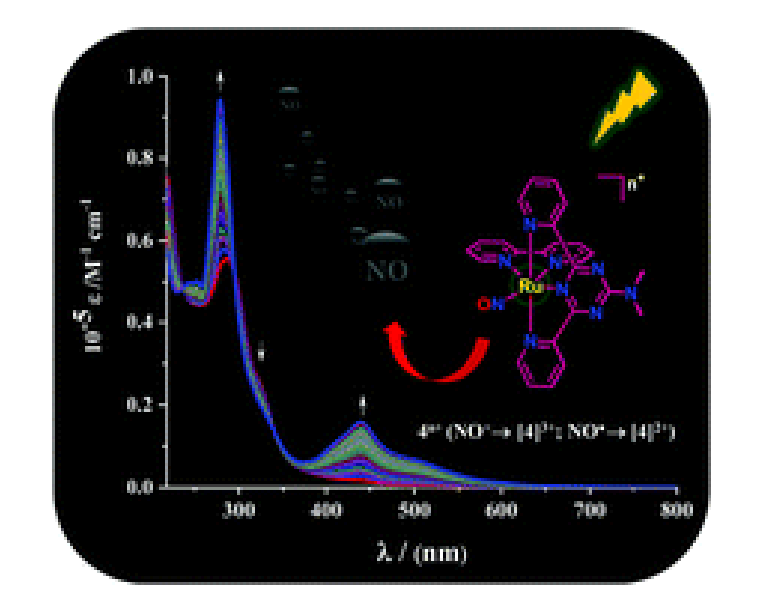
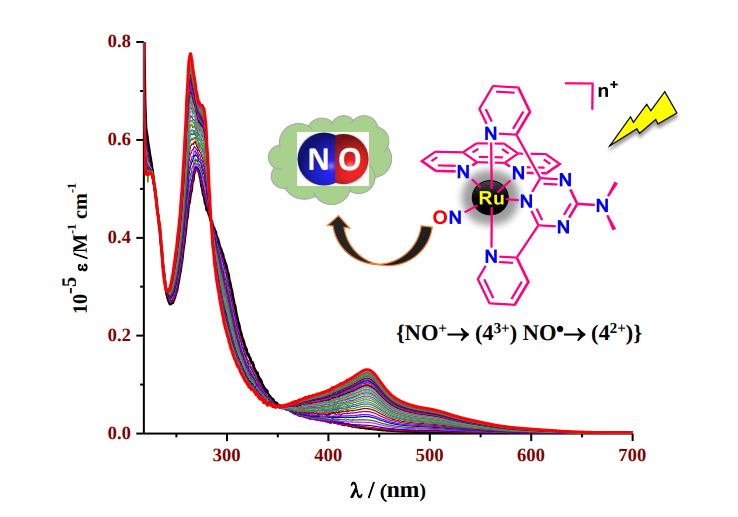
Near-IR Light-Induced Photorelease of Nitric Oxide (NO) on Ruthenium Nitrosyl Complexes: Formation, Reactivity, and Biological Effects B. Giri, T. Saini, S. Kumbhakar, K. S. K, A. Muley, A. Misra, S. Maji Dalton Trans., 2020, 49, 10772 – 10785.
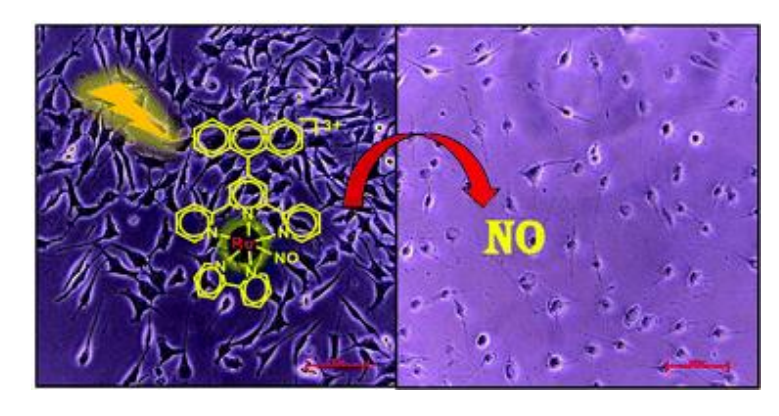
Formation, Reactivity, Photorelease, and Scavenging of NO in Ruthenium Nitrosyl Complexes B. Giri, S. Kumbhakar, K. Kalai Selvan, A. Muley, S. Maji Inorg. Chim. Acta, 2020, 502, 119360.
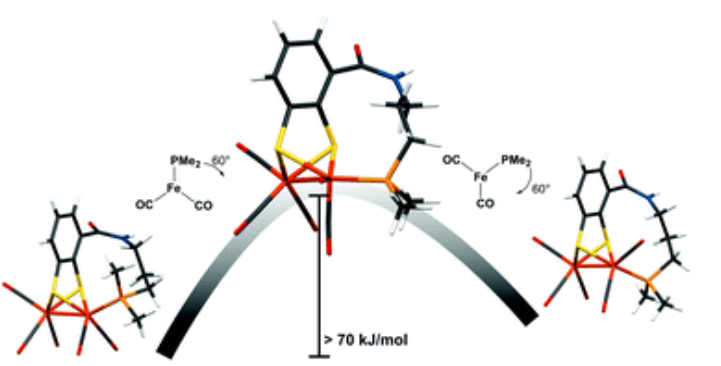
Restricted Rotation of an Fe(CO)2(PL3)-Subunit in [FeFe]-Hydrogenase Active Site Mimics by Intramolecular Ligation S. Pullen, S. Maji, M. Stein, S. Ott Dalton Trans., 2019, 48, 5933 – 5939.
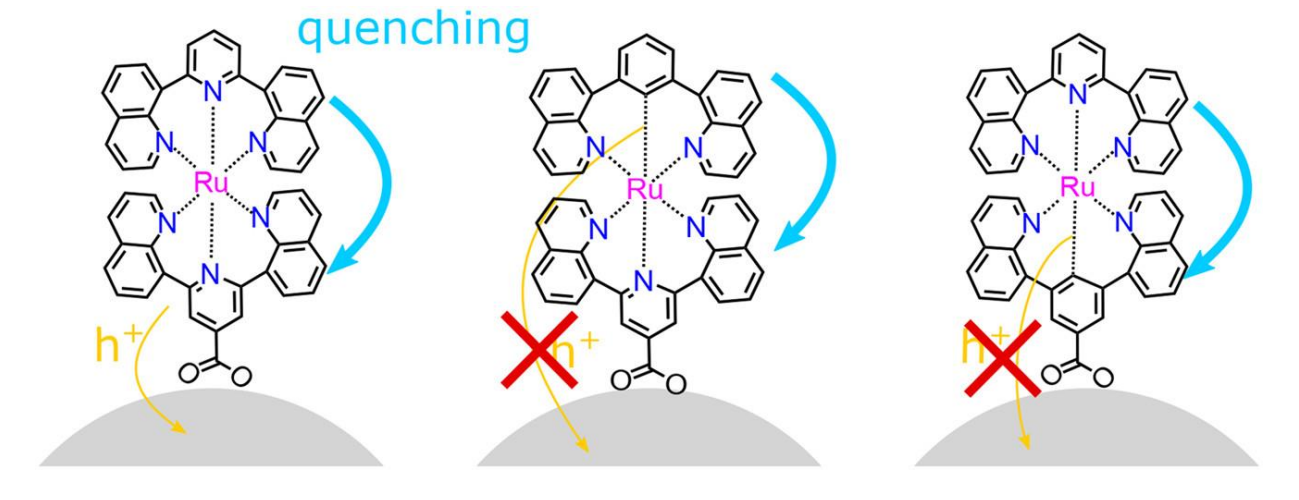
Self-Quenching and Slow Hole Injection May Limit the Efficiency in NiO-Based DyeSensitized Solar Cells J. Föhlinger, S. Maji, A. Brown, E. Mijangos, S. Ott, L. Hammarström J. Phys. Chem. C, 2018, 122, 13902 – 13910
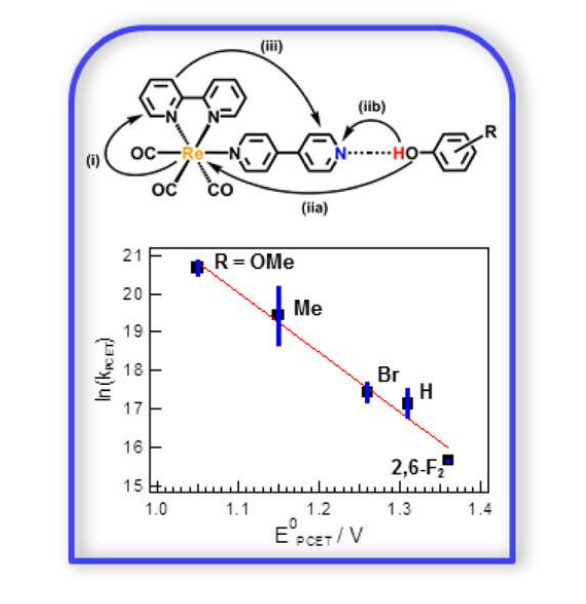
Analysis of Hydrogen-Bonding Effects on Excited-State Proton-Coupled Electron Transfer from a Series of Phenols to a Re(I) Polypyridyl Complex P. Dongare, A. G. Bonn, S. Maji, L. Hammarström J. Phys. Chem. C, 2017, 121, 12569 – 12576
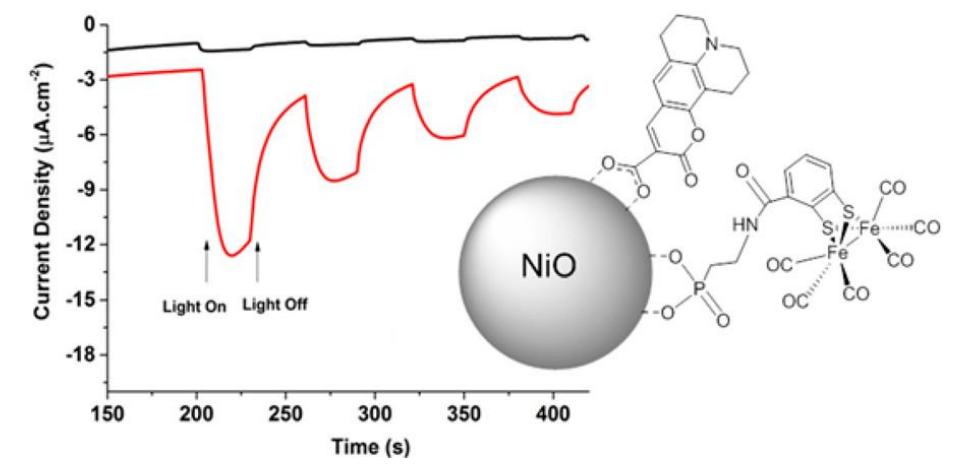
Dynamics and Photochemical H2 Evolution of Dye–NiO Photocathodes with a Biomimetic FeFe-Catalyst L. J. Antila, P. Ghamgosar, S. Maji, H. Tian, S. Ott, L. Hammarström ACS Energy Lett., 2016, 1, 1106 – 1111.
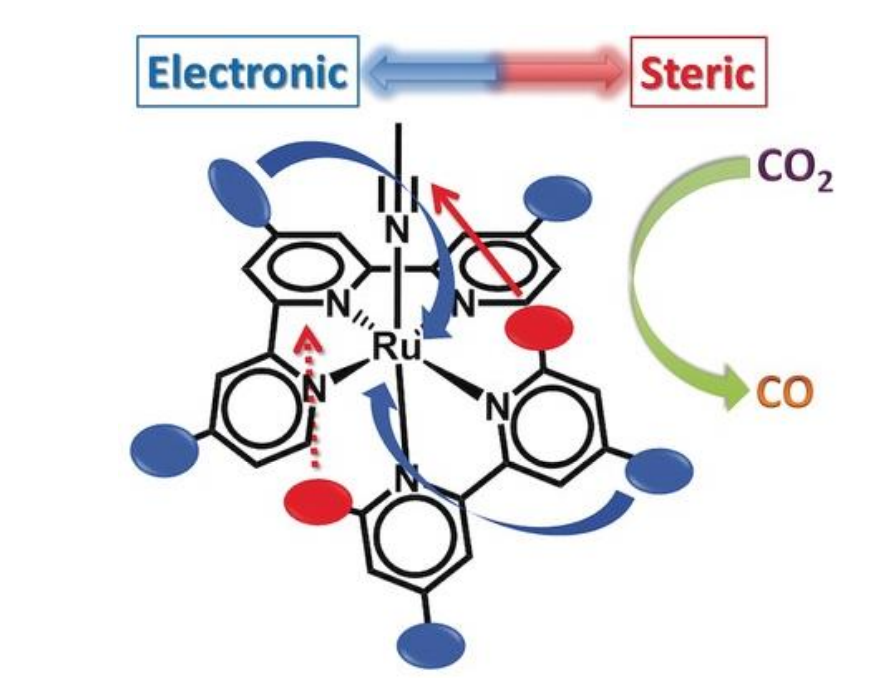
Judicious Ligand Design in Ruthenium Polypyridyl CO2 Reduction Catalysts to Enhance Reactivity by Steric and Electronic Effects B. A. Johnson, H. Agarwala, T. A. White, E. Mijangos, S. Maji, S. Ott Chem. Eur. J., 2016, 22, 14870 – 14880.
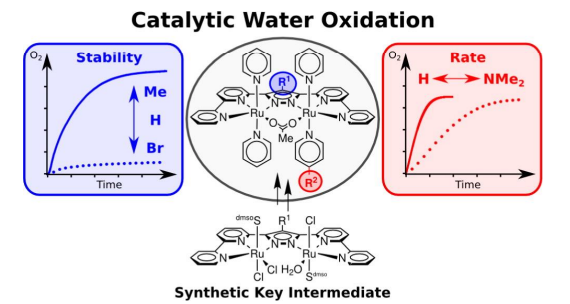
Establishing the Family of Diruthenium Water Oxidation Catalysts Based on the Bis(Bipyridyl)Pyrazolate Ligand System S. Neudeck, S. Maji, I. López, S. Dechert, J. Benet-Buchholz, A. Llobet, F. Meyer Inorg. Chem., 2016, 55, 2508 – 2521.
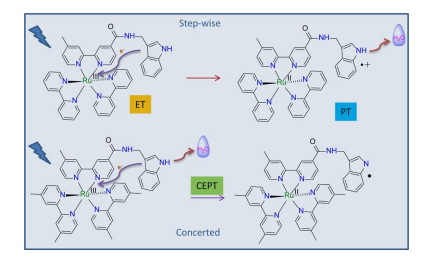
Direct Evidence of a Tryptophan Analogue Radical Formed in a Concerted Electron−Proton Transfer Reaction in Water P. Dongare, S. Maji, L. Hammarström J. Am. Chem. Soc., 2016, 138, 2194 – 2199.
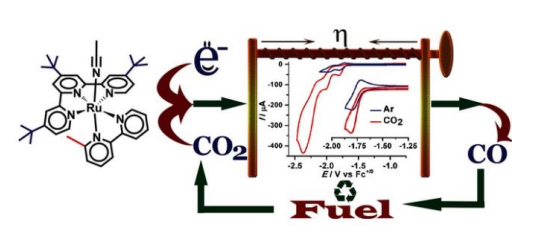
Activating a Low Overpotential CO2 Reduction Mechanism by a Strategic Ligand Modification on a Ruthenium Polypyridyl Catalyst B. A. Johnson, S. Maji, H. Agarwala, T. A. White, E. Mijangos, S. Ott Angew. Chem. Int. Ed., 2016, 55, 1825 – 1829.
Efficient light-driven water oxidation catalysis by dinuclear Ru complexes S. Berardi, L. Francàs, S. Neudeck, S. Maji, J. Benet-Buchholz, F. Meyer and A. Llobet Chem. Sus. Chem., 2015, 8, 3688 – 3696.
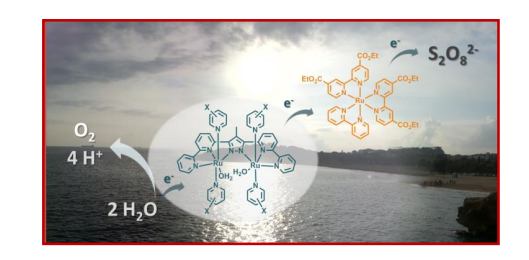
Highly Efficient Binuclear Ruthenium Catalyst for Water Oxidation A. C. Sander, S. Maji, L. Francàs, T. Böhnisch, S. Decherta, A. Llobet and F. Meyer Chem. Sus. Chem., 2015, 8, 1697 – 1702.
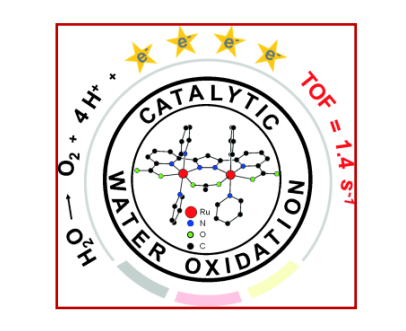
Tunable Electrochemical and Catalytic Features of BIAN- and BIAO-Derived Ruthenium Complexes A. Singha Hazari, A. Das, R. Ray, H. Agarwala, S. Maji, S. M. Mobin and G. K. Lahiri Inorg. Chem., 2015, 54, 4998-5012.
The Oxo-bridge Scenario Behind Single Site WOCs I. López, S. Maji, J. Benet-Buchholz and A. Llobet Inorg. Chem., 2015, 54, 658−666.
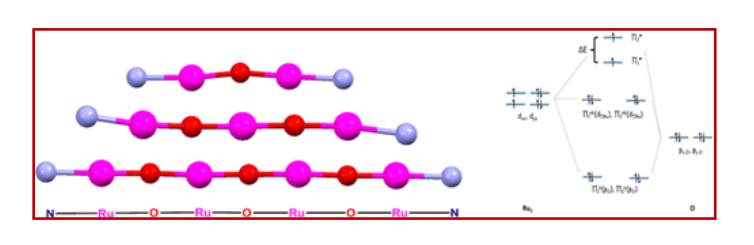
Direct observation of key catalytic intermediates in a photoinduced proton reduction cycle with a diiron carbonyl complex M. Mirmohades, S. Pullen, M. Stein, S. Maji, S. Ott, L. Hammarström, and R. Lomoth J. Am. Chem. Soc., 2014, 136, 17366−17369.
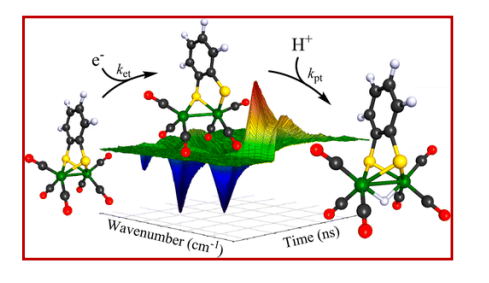
Mechanistic Insights into Electrocatalytic CO2 Reduction within [RuII(tpy)(NN)X]n+ Architectures T. A. White, S. Maji, and Sascha Ott Dalton Trans., 2014, 15028 – 15037.
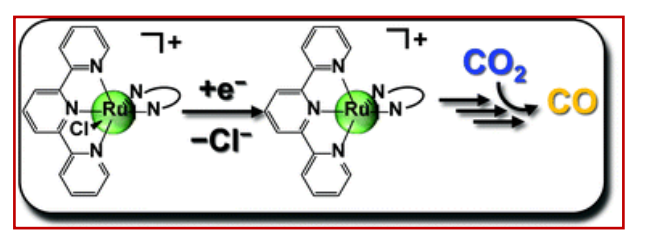
Competitive Oxygen-18 Kinetic Isotope Effects on Water Oxidation by Monomeric and Dimeric Ruthenium Catalysts A. M. Angeles-Boza,M. Zahid Ertem, R. Sarma, C. H. Ibañez, S. Maji, A. Llobet, C. J. Cramer and J. P. Roth Chem. Sci., 2014, 5, 1141-1152.
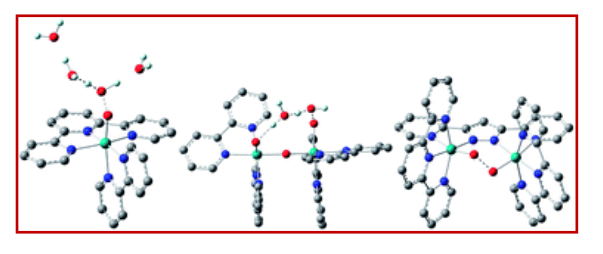
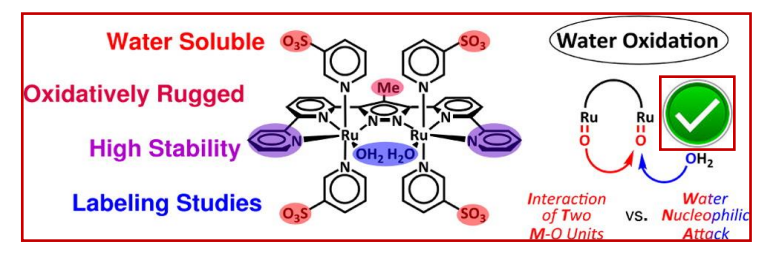
New Powerful and Oxidatively Rugged Dinuclear Ru WOCs: Control of Mechanistic Pathways by Tailored Ligand Design S. Neudeck, S. Maji, I. Lopez, S. Meyer, F. Meyer and A. Llobet J. Am. Chem. Soc., 2014, 136, 24-27.
Molecular Water Oxidation Mechanisms Followed by Transition Metals: State of the Art X. Sala, S. Maji, R. Bofill, J. García-Antón, L. Escriche and A. Llobet Acc. Chem. Res. 2014, 47, 504-516.
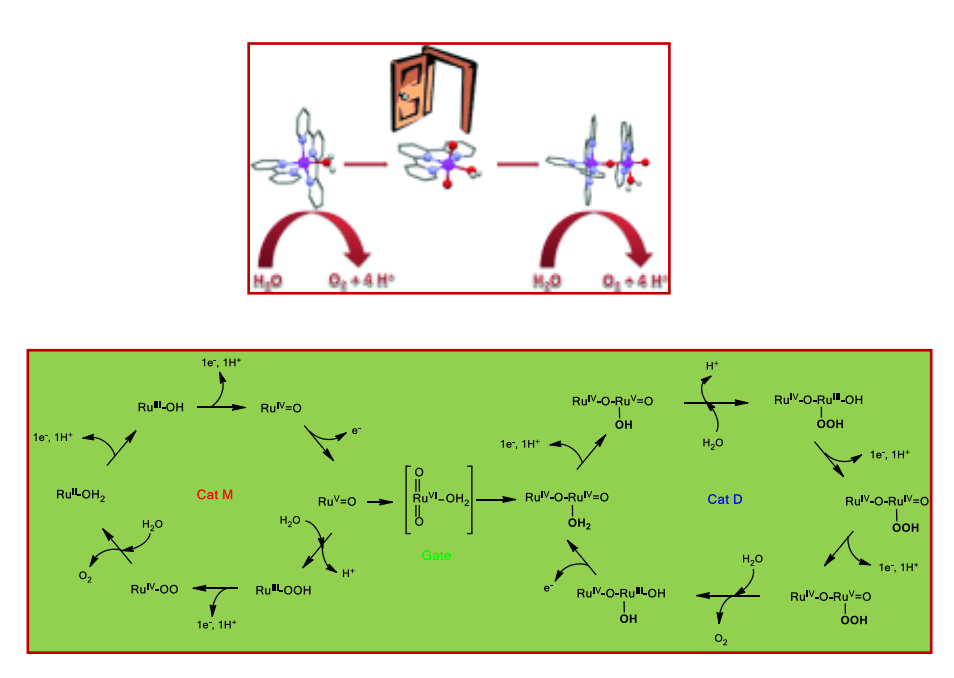
A Self-Improved Water-Oxidation Catalyst: Is One Site Really Enough? I. López, M. Z. Ertem, S. Maji, J. Benet‐Buchholz, A. Keidel, U. Kuhlmann, P. Hildebrandt, C. J. Cramer, V. S. Batista and A. Llobet Angew. Chem. Int. Ed., 2014, 53, 205 –209.
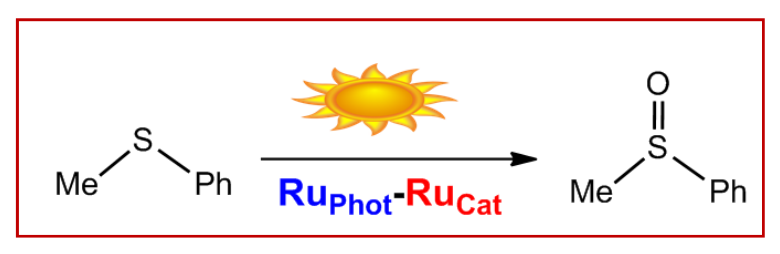
Synthesis, Characterization and Reactivity of Dyad Ru-Based Molecules for Light-Driven Oxidation Catalysis P. Farràs, S. Maji, F. Bozoglian, J. Benet-Buchholz and A. Llobet Chem. Eur. J., 2013, 19, 7162.
Mononuclear Ru water oxidation catalysts: discerning between electronic and hydrogen bonding effects S. Maji, I. López, J. Benet-Buchholz and A. Llobet Inorg. Chem., 2013, 52, 3591-3593.
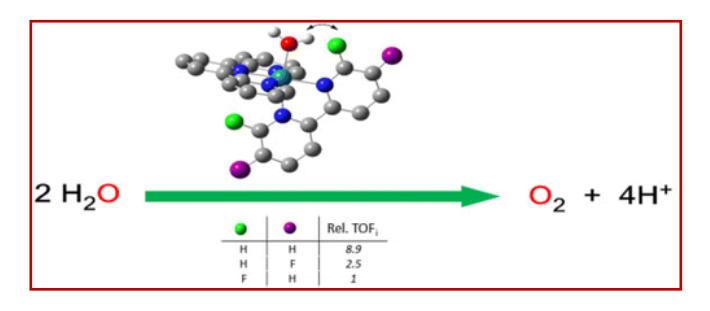
Electronic structure and catalytic aspects of [Ru(tpm)(bqdi)(Cl/H2O)] n , tpm = tris(1- pyrazolyl)methane and bqdi = o-benzoquinonediimine H. Agarwala, F. Ehret, A. Dutta Chowdhury, S. Maji, S. M. Mobin, W. Kaim and G. K. Lahiri Dalton Trans., 2013, 42, 3721-3734.
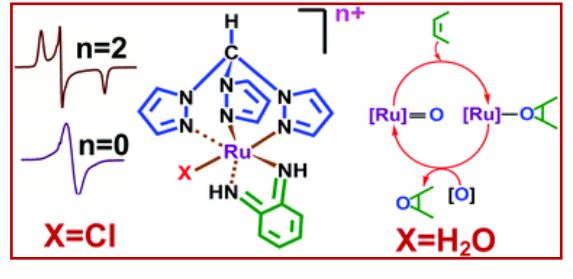
Synthesis, characterization of new isomeric Ru(Cl)2(H3p)(DMSO)2 complexes, their reactivity and linkage isomerization. S. Roeser, S. Maji, J. Benet-Buchholz, J. Pons and A. Llobet Eur. J. Inorg. Chem., 2013, 232-240.
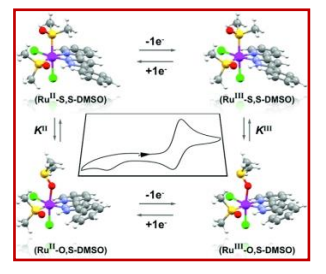
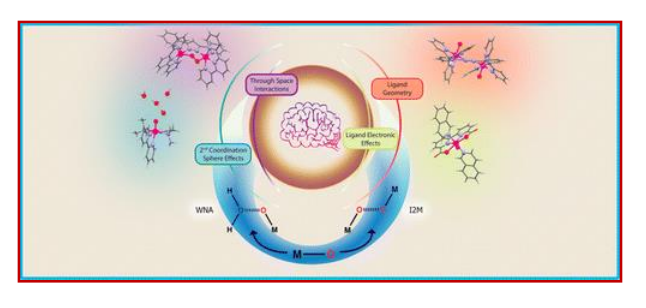
Ligand Geometry Directs O-O Bond Formation Pathway in New trans-RuHbpp Based Water Oxidation Catalyst S. Maji, L. Vigara, F. Cottone, F. Bozoglian, J. Benet-Buchholz and A. Llobet Angew. Chem. Int. Ed., 2012, 51, 5967.
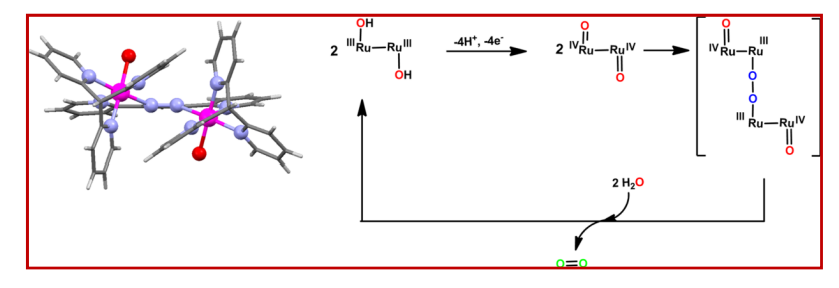
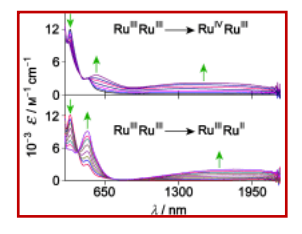
Correspondence of RuIIIRuII and RuIVRuIII Mixed Valent States in a Small Dinuclear Complex H. Agarwala, T. Scherer, S. Maji, T. K. Mondal, S. M. Mobin, J. Fiedler, F. A. Urbanos, R. Jiménez-Aparicio, W. Kaim and G. K. Lahiri Chem. Eur. J., 2012, 18, 5667.
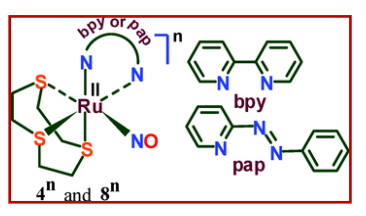
Ruthenium nitrosyl complexes with 1,4,7-trithiacyclononane and 2,2′-bipyridine (bpy) or 2- phenylazopyridine (pap) coligands. Electronic structure and reactivity aspects P. De, S. Maji, A. Dutta Chowdhury, S. M. Mobin, T. K. Mondal and G. K. Lahiri Dalton Trans., 2011, 12527-12539.
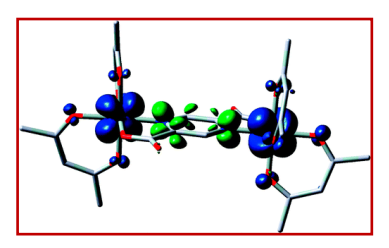
Reductive Approach to Mixed Valency (n=1−) in the Pyrazine Ligand-Bridged [(acac)2Ru(- L 2− )Ru(acac)2] n (L2−= 2,5-Pyrazine-dicarboxylate) through Experiment and Theory A. Das, T. Scherer, S. Maji, T. K. Mondal, S. M. Mobin, F. A. Urbanos, R. Jiménez-Aparicio, W. Kaim, and G. K. Lahiri Inorg. Chem., 2011, 50, 7040-7049.
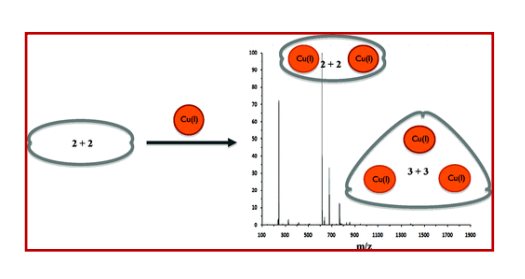
Ligand Influence Over the Formation of Dinuclear [2+2] versus Trinuclear [3+3] CuI Schiff Base Macrocyclic Complexes A. Arbuse, S. Mandal, S. Maji, M. A. Martínez, X. Fontrodona, D. Utz, F. W.Heinemann, S. Kisslinger, S. Schindler, X. Sala and A. Llobet Inorg. Chem., 2011, 50, 6878-6889.
Stabilization of {RuNO}6 and {RuNO}7 States in [RuII(trpy)(bik)(NO)]n+ (trpy = 2,2/ :6/ ,2// - Terpyridine, bik = 2,2/ -Bis(1-methylimidazolyl)ketone). Synthesis, Reactivity and Photorelease of Metal Bound Nitrosyl P. De, B. Sarkar, S. Maji, A. K. Das, E. Bulak, S. M. Mobin, W. Kaim and G. K. Lahiri Eur. J. Inorg. Chem., 2009, 2702.
Intramolecular Valence and Spin Interaction in meso and rac Diastereomers of a p-Quinonoid Bridged Diruthenium Complex D. Kumbhakar, B. Sarkar, S. Maji, S. M. Mobin, J. Fiedler, F. A. Urbanos, R. Jimenez-Aparicio, W. Kaim and G. K. Lahiri J. Am. Chem. Soc., 2008, 130, 17575-17583.
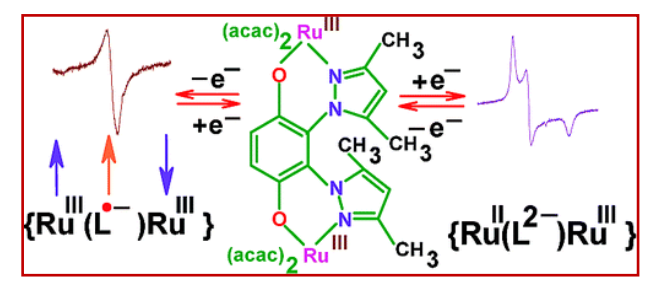
Valence State Analysis via Spectroelectrochemistry in Differently Quinonoid Bridged Diruthenium Complexes [(acac)2Ru(-L)Ru(acac)2] n+ (n = +2, +1, 0, −1, −2) S. Ghumaan, B. Sarkar, S. Maji, V. G. Puranik, J. Fiedler, F. A. Urbanos, R. Jimenez− Aparicio, W. Kaim and G. K. Lahiri Chem. Eur. J., 2008, 14, 10816.
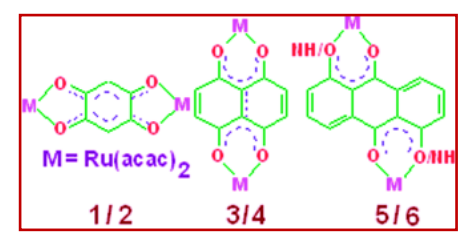
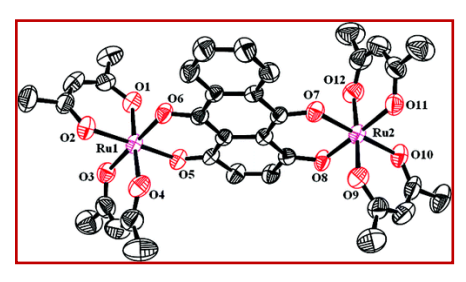
Valence State Alternatives in Diastereoisomeric Complexes [(acac)2Ru(- QL)Ru(acac)2] n (QL2− = 1,4-Dioxido-9,10-anthraquinone, n = +2,+1,0,-1,-2) S. Maji, B. Sarkar, S. M. Mobin, J. Fiedler, F.A. Urbanos, R. Jimenez-Aparicio, W. Kaim and G. K. Lahiri Inorg. Chem., 2008, 47, 5204-5211.
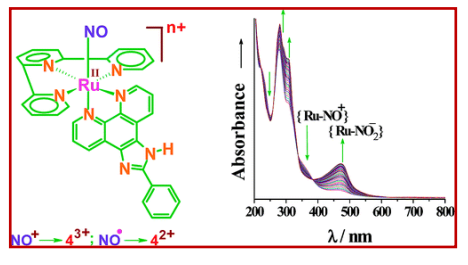
Formation, Reactivity and Photorelease of Metal Bound Nitrosyl in [Ru(trpy)(L)(NO)]n+ (trpy = 2,2/ :6/ ,2// -Terpyridine, L = 2-Phenylimidazo[4,5-f]1,10-phenanthroline) S. Maji, B. Sarkar, M. Patra, A. K. Das, S. M. Mobin, W. Kaim, and G. K. Lahiri Inorg. Chem., 2008, 47, 3218-3227.
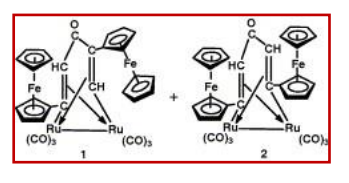
Synthesis, structure and electrochemistry of CO incorporated diruthenium metallacyclic compounds [Ru2(CO)6{μ-η 1 :η1 :η2 :η2 -1,4-Fc2C5H2O}] and [Ru2(CO)6{μ-η 1 :η1 :η2 :η2 -1,5- Fc2C5H2O}] P. Mathur, S. Chatterjee, A. Das, G. K. Lahiri, S. Maji and S. M. Mobin J. Organomet. Chem., 2007, 692, 1601.
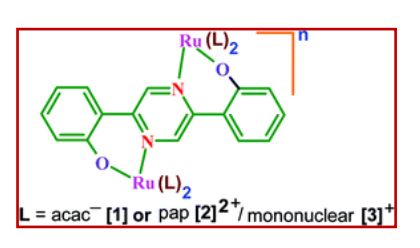
Non−innocent behaviour of ancillary and bridging ligands in homovalent and mixed−valent ruthenium complexes [A2Ru(−L)RuA2] n , A = 2,4−pentanedionato or 2−phenylazopyridine, L 2− = 2,5–bis(2−oxidophenyl)pyrazine S. Maji, B. Sarkar, S. M. Mobin, J. Fiedler, W. Kaim and G. K. Lahiri Dalton Trans., 2007, 2411-2418.
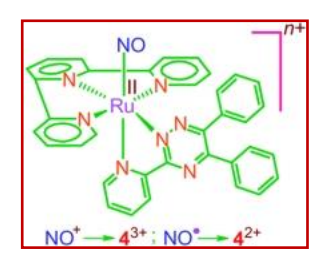
Synthesis and Spectro−electrochemical Aspects of [RuII(trpy)(pdt)(X)]n+ (trpy = 2,2/ :6/ ,2//− terpyridine, pdt = 3−pyridyl−5,6−diphenyl−as− triazine, X = Cl− , CH3CN, NO2 − , NO+ , NO• ). Electrophilicity of {RuII−NO+ } and Photolability of {RuII−NO•} S. Maji, C. Chatterjee, S. M. Mobin, and G. K. Lahiri Eur. J. Inorg. Chem., 2007, 3425.
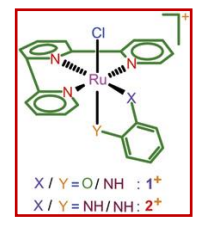
Valence State Distribution in Ruthenium−o−Quinonoid Systems [Ru(trpy)(Cl)(L1 )]+ [1]+ and [Ru(trpy)(Cl)(L2 )]+ [2]+ where L1 = o−Iminobenzoquinone, L2 = o−Diiminobenzoquinone and trpy = 2,2/ :6/ ,2// −Terpyridine S. Maji, S. Patra, S. Chakraborty, D. Janardanan, S. M. Mobin, R. B. Sunoj and G. K. Lahiri Eur. J. Inorg. Chem., 2007, 314
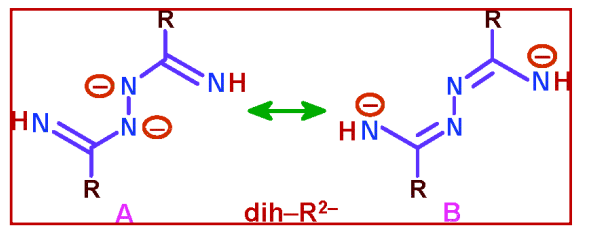
Metal−Induced Reductive Ring Opening of 1,2,4,5−Tetrazines: Three Resulting Coordination Alternatives, Including the New Non−Innocent 1,2−Diiminohydrazido(2−) Bridging Ligand System S. Maji, B. Sarkar, S. Patra, J. Fiedler, S. M. Mobin,V. G. Puranik, W. Kaim and G. K. Lahiri Inorg. Chem., 2006, 45, 1316-1325.
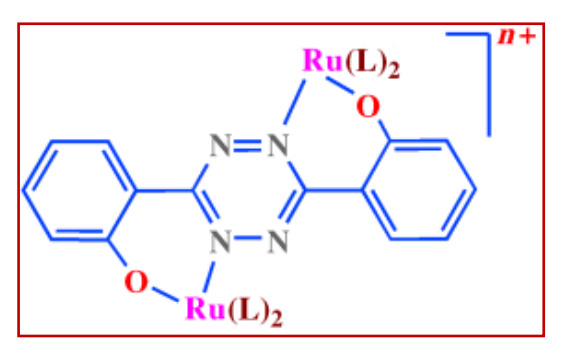
Controlling Metal/Ligand/Metal Oxidation State Combinations by Ancillary Ligand (L) Variation in the Redox Systems [L2Ru(−boptz)RuL2] n , boptz = 3, 6−bis(2−oxidophenyl)−1, 2, 4, 5− tetrazine and L= acac− , bpy or pap (2−phenylazopyridine) S. Patra, B. Sarkar, S. Maji, J. Fiedler, F. A. Urbanos, R. Jimenez−Aparicio, W. Kaim, and G. K. Lahiri Chem. Eur. J., 2006, 12, 489